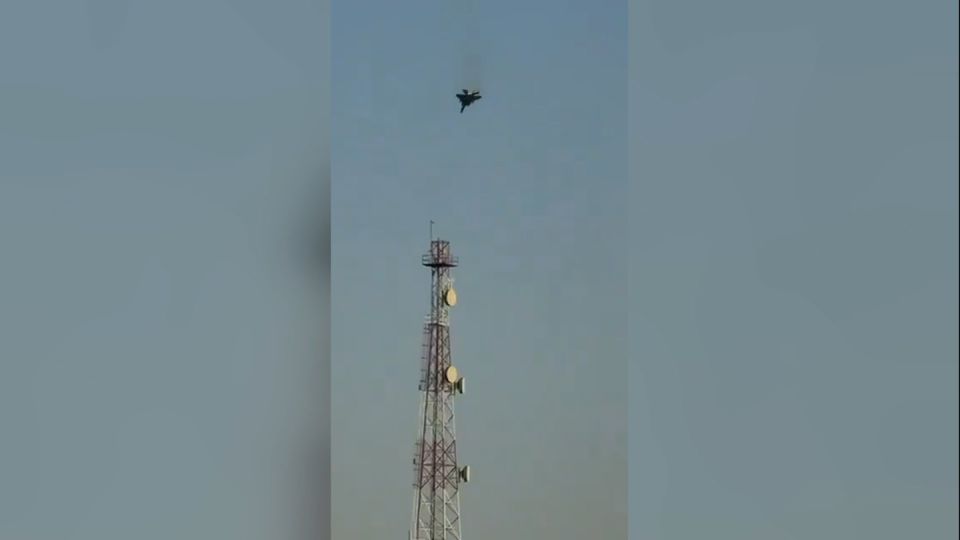
In a stark testament to the escalating tensions gripping the Middle East, a US Air Force F-15E fighter jet dramatically crashed in Kuwait on March 2, 2026. Viral footage captured the multi-role aircraft descending in flames, its crew heroically ejecting moments before impact. The immediate rescue by local civilians brought a crucial human element to an incident shrouded in geopolitical mystery, occurring amidst a fierce exchange of hostilities between Iran, the US, and Israel. This significant event has not only highlighted the inherent dangers of military operations in a volatile region but also amplified questions surrounding air defense protocols and regional stability.
The incident unfolded during a period of heightened alert, as Iranian retaliation strikes across Gulf states followed earlier US and Israeli attacks on Iran. Kuwait, a key US ally, found itself caught in the crossfire, reporting interceptions of "hostile aerial targets" and suffering casualties from the ongoing bombing campaign. The sight of an advanced American fighter jet falling from the sky added a new, alarming dimension to the already complex and dangerous situation. Understanding the full scope of this f-15 crash koeweit requires a deep dive into the immediate events, the competing theories regarding its cause, and the broader geopolitical implications.
The Dramatic Incident: What Happened in Kuwait?
The morning of March 2, 2026, broke with an ominous development: a US Air Force F-15E Strike Eagle, a cornerstone of American air power, was seen spiraling downwards over Kuwaiti territory. Online footage, quickly disseminated across social media, depicted the formidable aircraft engulfed in flames, specifically trailing from one of its powerful twin engines. Eyewitness accounts and video evidence crucially showed two figures ejecting from the burning jet, parachutes blooming against the desert sky. These were the pilot and, presumably, the Weapons Systems Officer (WSO), a two-person crew vital to the F-15E's combat effectiveness.
Against a backdrop of regional conflict, the immediate aftermath of the crash saw an inspiring display of local heroism. Preliminary reports, corroborated by shared images and videos, indicated that both airmen survived the high-altitude ejection. They were subsequently located and assisted on the ground by Kuwaiti civilians. One image purportedly showed an airman being transported in a civilian vehicle, while another depicted a crew member being recovered near his parachute by compassionate locals. While the airmen were reported to have sustained non-life-threatening injuries, their survival and the quick response from the local populace underscored a vital bond between the US forces stationed in Kuwait and the civilian population. According to Kuwait’s Ministry of Defense, all crew members from several US military aircraft crashes in the country during this period survived and were evacuated for medical checks, with investigations underway. For more details on the survival amid tensions, read our related article: F-15 Crash in Kuwait: Crew Survives Amid Gulf Tensions.
Unraveling the Cause: Competing Narratives and Complexities
The cause of the f-15 crash koeweit immediately became a focal point of international speculation, with various theories emerging amidst the fog of war. No official statement from the US military or Kuwaiti authorities confirming the definitive cause was available at the time, leaving room for conflicting narratives.
Iranian Claims of Responsibility
Quick to seize on the opportunity, Iranian state-affiliated media, including IRNA, promptly claimed responsibility for downing the jet. They asserted that Iranian "defensive systems" were responsible, framing it as retaliation for recent US and Israeli strikes. Tehran specifically cited the recent death of its Supreme Leader as the catalyst for an "unrestricted" regional response. Such claims, while expected in a propaganda war, added a layer of complexity and potential for escalation, directly linking the crash to the broader Iran-Israel conflict.
The "Friendly Fire" Theory
Perhaps the most disturbing theory circulating among regional military analysts was that of "friendly fire." The Middle East airspace, particularly around Gulf states like Kuwait, is notoriously "hyper-congested" during periods of conflict. With multiple layers of allied air defenses – including Patriot missile batteries and Aegis-equipped destroyers – operating on high alert, the risk of misidentification is a grim reality. Experts speculated that the F-15 might have been mistakenly targeted by allied air defense systems, a tragic consequence of the immense pressure and rapid decision-making required in a combat environment. Even with sophisticated Identification Friend or Foe (IFF) systems, human error, system glitches, or unexpected maneuvers can lead to catastrophic consequences. To delve deeper into this aspect, consider reading: US F-15 Crashes in Kuwait: Friendly Fire or Iranian Claim?.
Mechanical Failure: A Persistent Possibility
Amidst the geopolitical claims and counter-claims, mechanical failure remained a very real possibility. The F-15E Strike Eagle, while a robust and highly capable aircraft, is a complex machine operating under extreme conditions. Visible flames trailing from one of its engines, as depicted in viral videos, strongly suggest an engine malfunction or fire. Factors such as metal fatigue, system failures, or even bird strikes can lead to catastrophic breakdowns. Even the most meticulously maintained aircraft are not immune to such incidents, especially during prolonged periods of high-intensity operations and environmental stress in a desert climate. An investigation would involve meticulous analysis of flight recorders and wreckage to ascertain if a technical fault was the primary cause.
Regional Ramifications: Geopolitical Fallout and Escalation Risks
The f-15 crash koeweit did not occur in a vacuum; it was a symptom and amplifier of a deeply unstable regional climate. Kuwait, a nation striving for stability while hosting significant US military assets, found itself increasingly vulnerable. The incident occurred on the third day of Iranian retaliatory strikes following earlier US and Israeli attacks. Kuwait’s state news agency KUNA reported civil defense director-general Mohammed Al-Mansouri stating that Kuwaiti air defenses had intercepted an unspecified number of "hostile aerial targets" at dawn on the same day, with no injuries reported from these interceptions. However, the Health Ministry confirmed one person had been killed and 32 others, all foreign nationals, injured in Kuwait since the start of the Iranian bombing campaign.
The plume of smoke reported above the Embassy of the United States in Kuwait City further underscored the immediate threat. Such incidents heighten the stakes for all parties involved. For the US, it means a review of operational safety, intelligence gathering, and potentially a reassessment of force posture. For Kuwait, it complicates its delicate balancing act between alliance commitments and regional neutrality. For Iran, any successful claim of downing an American jet, whether true or not, is a propaganda victory, potentially emboldening further actions. The risk of miscalculation, accidental escalation, or a broadening of the conflict remains incredibly high, demanding careful diplomatic and military de-escalation strategies from all global powers involved.
Lessons Learned and Future Preparedness
The f-15 crash koeweit offers critical insights into the challenges of modern warfare and military presence in highly contested environments. Regardless of the ultimate cause, several key takeaways emerge:
- Importance of De-escalation: The primary lesson is the urgent need for diplomatic solutions to de-escalate regional tensions. When multiple state and non-state actors are engaged in tit-for-tat exchanges, the likelihood of tragic incidents, whether accidental or intentional, skyrockets.
- Air Defense Coordination: If the "friendly fire" theory holds, it highlights the paramount importance of robust, real-time, and perfectly integrated Identification Friend or Foe (IFF) systems and communication protocols between allied forces. In a "hyper-congested" airspace, even milliseconds of delay or misidentification can have fatal consequences. Regular, multi-national drills focused on these scenarios are crucial.
- Crew Training and Resilience: The survival of the F-15 crew, rescued by local civilians, is a testament to rigorous military training in ejection procedures and survival skills. It also underscores the importance of strong community relations in host nations, as local assistance proved vital.
- Transparency in Investigation: For regional stability and to counter misinformation, a transparent and timely investigation into the incident is essential. Releasing findings, even if sensitive, helps prevent speculation from fueling further conflict.
Practical advice for military planners in such scenarios would include regularly reviewing and updating Rules of Engagement (ROE) to account for rapidly evolving threats, investing in advanced command and control systems for seamless inter-allied communication, and conducting frequent, realistic training exercises simulating complex air defense environments. Furthermore, robust intelligence sharing and threat assessment are crucial to anticipating and mitigating risks.
The Kuwait F-15 incident serves as a stark reminder of the ever-present dangers faced by military personnel in conflict zones and the broader implications for regional peace. As the investigation continues, the international community watches closely, hoping that clarity on this incident can contribute to a reduction in the perilous tensions that currently grip the Middle East. The resilience of the crew and the compassion of the Kuwaiti civilians offer a glimmer of hope amidst the shadow of conflict.